

Being an aircraft pilot
The Pilot Career
How to be an Aircraft Pilot in Portugal?
An airline pilot career is one of the most rewarding paths in aviation. At IFA, our EASA-approved Commercial Pilot Licence (CPL/ATPL) training prepares you to fly professionally—from your very first lesson to the flight deck of an airline.
Our students learn from experienced instructors, train in advanced simulators and aircraft, and develop the discipline, confidence, and technical expertise required to operate safely in today’s complex aviation environment.
Whether your goal is to fly private jets, work for regional airlines, or operate international routes, this course is the first step toward the career of a lifetime.
Airline Commercial Private Certified in the European Union (EU) Pilot
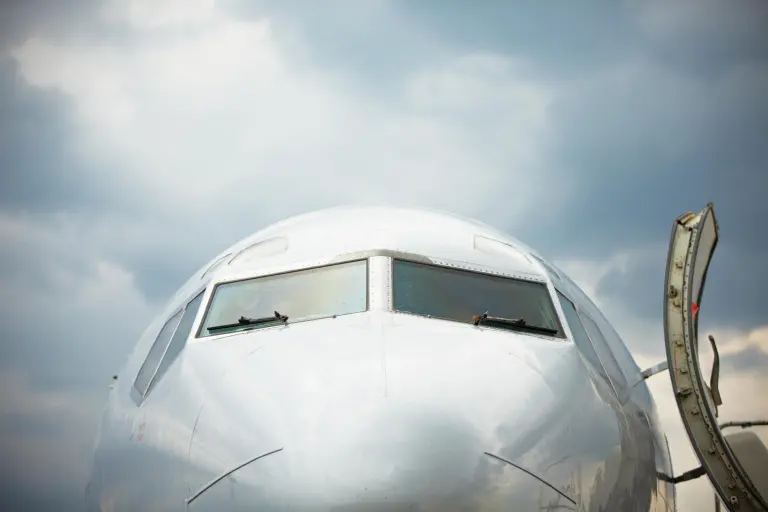
Pilot Career
A Few interesting facts for you!
- On average, an airline pilot flies between 700 and 900 hours per year, balancing flight operations with simulator training, recurrent proficiency checks, and mandatory rest periods to ensure the highest standards of safety and performance.
- Commercial pilot training involves more than 200 hours of flight experience, along with hundreds of additional hours spent in simulators and theoretical ground school. This rigorous training ensures pilots are fully prepared to meet the technical, operational, and safety demands of professional aviation.
- The role of a First Officer extends far beyond simply assisting the Captain. Both pilots share responsibility for decision-making, flight management, and safety, working together as a coordinated team to ensure every operation is conducted efficiently and safely.
- Throughout their careers, pilots undergo continuous training and professional development. They regularly participate in mandatory simulator sessions and proficiency assessments, allowing them to update their knowledge, strengthen their skills, and practice emergency procedures in a safe and controlled environment.
- Communication is global. English is the official language of aviation, enabling pilots around the world to communicate using a common standard. This shared language ensures clear, efficient, and safe communication between flight crews, air traffic controllers, and aviation professionals across international borders.
- Many First Officers (co-pilots) begin their commercial aviation careers flying jet aircraft with more than 180 passengers on board. Thanks to extensive training, advanced aircraft systems, and close collaboration with experienced Captains, they are fully prepared to operate safely and professionally from the very start of their airline careers.
Pilot Career & Profession – Questions & Answers
Here you can find answers to the most frequently asked questions about training, entry requirements for the profession, pilot career opportunities, and the day-to-day life of a pilot.
After completing your training, you will undertake a Type Rating on a specific aircraft operated by your future airline, such as the Airbus A320, Boeing 737, or Embraer 190. This phase focuses on an in-depth study of the aircraft and its systems, preparing you to serve as a First Officer in commercial operations.
Did you know...?
Additional Information About the Airline Pilot Career
Supplementary information about the profession and day-to-day life of an airline pilot.
-
1. Lifestyle and Work Environment
Airline pilots do not work the standard 9-to-5 schedule. Their rosters vary, with some flights taking place early in the morning, at night, on weekends, or on long-haul routes. Spending time away from home is common, but airlines provide rest periods in accordance with strict safety regulations. Many pilots enjoy benefits such as travel opportunities, layovers in international cities, and the chance to see the world while earning a living. -
2. Continuous Learning
Pilots never stop training throughout their careers. Regular simulator checks, safety exercises, and type rating renewals are all part of the professional journey. EASA regulations require periodic proficiency assessments, ensuring that pilots remain up to date with procedures and the systems of modern aircraft. -
3. Career Flexibility
With experience, pilots can transition between different types of operations and airlines, including short-haul and long-haul flights, cargo transport, business aviation, or private charter flights. Some also choose to pursue more specialised careers, such as flight instructor, simulator instructor, training captain, or roles in airline operations management. -
4. International Opportunities
An EASA licence opens doors around the world - many licensed pilots find opportunities in Europe, the Middle East, Asia, and even Latin America. Some airlines offer sponsorship for additional qualifications or support for international mobility, making it easier to progress your career on a global scale. -
5. Professional Recognition
Airline pilots are highly respected professionals who combine technical expertise, a strong sense of responsibility, and leadership skills. This career attracts individuals who enjoy problem-solving, working as part of a team, and facing constant challenges in a dynamic and demanding environment. -
6. Financial Outlook Beyond Salary
Pilots generally benefit from pension plans, travel benefits, health insurance, and sometimes performance bonuses. Senior Captains operating long-haul aircraft can earn significantly high levels of remuneration, which may exceed €120,000 to €150,000 per year, depending on the airline, experience, and type of operation. -
7. Community and Network
Pilots become part of a global professional community, where networking with colleagues, instructors, and airline mentors plays an essential role. Former flight school students often return to share their experiences, advise new pilots, and promote opportunities within the industry.
Advanced MCC Training
APS MCC Course: Preparing Pilots for Real-World Flying
Como ser Piloto de Aviões em Portugal?
Did you know that the APS MCC course includes around 40 hours of simulator training, almost double the time of a standard MCC course?
This additional training goes far beyond extra hours; it is about operational realism. The course has been developed in cooperation with airlines to replicate real airline operations, procedures, and teamwork in a realistic airline environment.
With its strong focus on operational scenarios and multi-crew decision-making, many airlines prefer – and some even require – candidates with APS MCC training, as they demonstrate a higher level of preparedness for Type Rating and line training from day one.

How do pilot courses work?
Step by Step to the Cockpit:
4 main stages of commercial or airline pilot training
Choose the course
For professional pilot training courses, choose either the Integrated ATPL or Modular ATPL pathway.
Theoretical Training
Acquire the essential technical foundations required to fly safely.
Flights and Simulators
Combine real flight training with certified simulator instruction.
Type Rating (optional)
Specialise in a commercial aircraft such as the A320 or B737 NG.
All About Pilot Training
Everything you need to know to become an airline pilot.
From your very first flight lesson to advanced airline operations training, we support you throughout the entire journey. Explore our Integrated and Modular ATPL(A) programmes, discover how we prepare you for real-world airline operations, and find answers to the most frequently asked questions about your path to the flight deck.
– A CPL allows you to be paid for flying – for example, as a flight instructor, air taxi pilot, or First Officer.
– An ATPL is the highest level of pilot qualification and is required to serve as a Captain on multi-crew commercial aircraft. Most students begin with an integrated ATPL programme, which includes the CPL, Instrument Rating (IR), and Multi-Crew Cooperation (MCC) course.
– Both pathways lead to the same goal — the EASA Airline Transport Pilot Licence (ATPL) — but they are suited to different student profiles.
The Integrated ATPL(A) programme is a structured full-time course that takes you from zero flight experience to a commercial pilot qualification, ready for airline training. The entire pathway — theory, flight training, simulator sessions, and advanced modules — follows a continuous training plan. It is the fastest and most immersive way to become a professional pilot.
– The Modular ATPL(A) pathway, on the other hand, allows you to train in stages, at your own pace. You can complete each phase — such as the PPL, ATPL theory, flight hour building, CPL, IR, and MCC — independently, often while working or studying part-time.
– Both pathways meet the same EASA standards; the choice depends on your availability, budget, and learning style. Many airline pilots follow the modular route because of its flexibility and, in some cases, lower cost, while integrated programmes remain the preferred option for those seeking a more intensive and structured academy-style experience.
– AUPRT stands for Advanced Upset Prevention and Recovery Training.
This training teaches pilots how to recognise, avoid, and recover from abnormal aircraft attitudes or loss-of-control situations in flight.
– The training increases confidence and safety by helping pilots understand aircraft behaviour and control limits. It is not just a regulatory requirement; it is one of the most valuable courses for real-world flight operations.
– APS MCC (Airline Pilot Standard Multi-Crew Cooperation) is an advanced version of the traditional MCC course.
It focuses on real airline procedures, flight management, and teamwork in a multi-crew environment.
– Through advanced simulator sessions and scenario-based exercises, pilots learn how to communicate, manage workload, and make decisions effectively, just as they would in an airline operation. Many airlines prefer or require candidates with APS MCC training, as this course reduces the gap between initial training and proficiency in a real operational environment.
Start your journey as a private or commercial pilot
Take a look at some of the pilot training courses you should consider.
Being a pilot is more than a profession – it is a way of life. With global demand for new Captains continuing to grow, now is the ideal time to invest in your career in the skies. IFA prepares you for a demanding market with comprehensive, certified, and airline-oriented training.
Integrated ATPL(A)
The Advanced Integrated ATPL program is the fastest route to obtaining a commercial pilot licence, allowing you to apply for positions with airlines.
Modular ATPL(A)
The Modular ATPL program allows you to obtain your professional pilot licence at a measured pace and with a phased investment.
Private Pilot PPL(A)
If you dream of flying private aircraft or escaping routine with peace and freedom, but do not intend to fly professionally, this is the ideal course for you.