– Student insurance
– 888 hours of ATPL(A) theoretical training
– 13 written examinations at the National Civil Aviation Authority (one attempt per subject)
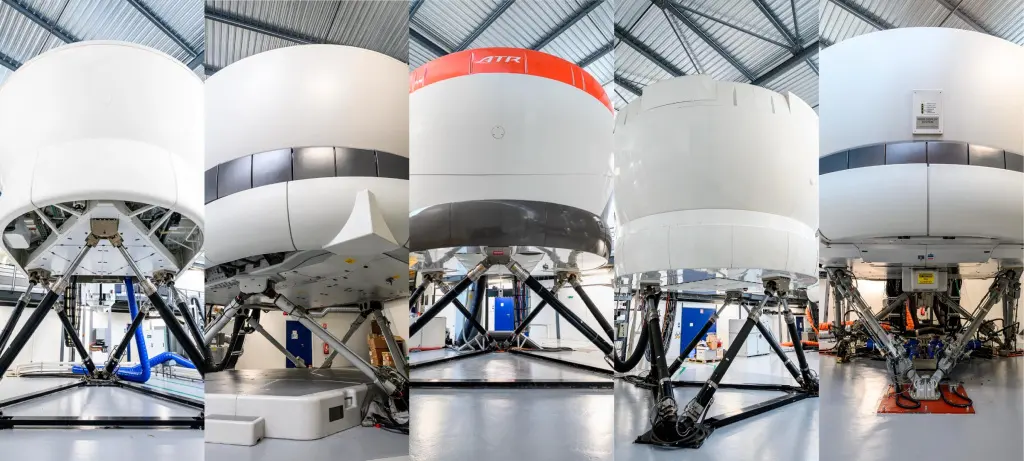
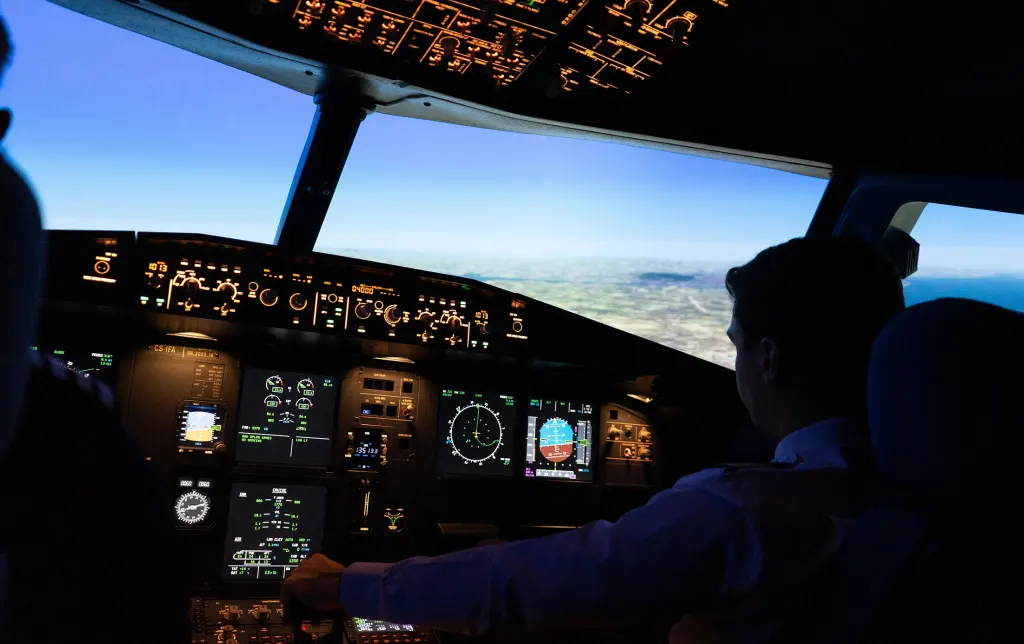
– 160 hours of flight training + 55 hours in an A320 simulator (MCC*)
– UPRT: Upset Prevention and Recovery Training
– PBN: Performance-Based Navigation
– Initial EASA Class 1 Medical Certificate
– ICAO Aviation English Examination
– Pilot Logbook and Student Card
– Admission Assessment
– SEP, CPL and MEP/IR Skill Tests
*An upgrade to APS MCC A320 or B737 is available – 40 hours
– Continuous and uninterrupted planning
The training is structured in an integrated way, avoiding gaps between the licensing course and the Type Rating. This way, you maintain focus and consistency throughout.
– Lower overall cost
By combining the ATPL(A) and the Type Rating in the same package, you benefit from a more competitive price compared to taking the courses separately.
– Efficient and motivating progression
Continuing education allows you to maintain the pace of learning, develop skills in a solid way and enter the market with confidence and motivation.
– IFR and VFR Plotters
– CRP5 and Calculator
– VFR and IFR Charts
– Airways Manual and Digital Course Manuals
– Headsets
– iPad
– Aerodrome Access Card
– Question Bank
– Uniform and Backpack
– Be at least 17 years of age and have successfully completed secondary education in order to begin the EASA ATPL(A) theoretical course.
– Be fluent in English, both spoken and written. All manuals, tests, and ANAC examinations require this.
– Study declaration for non-European students, issued after enrolment for student visa application purposes.
– Have no criminal record during the previous 5 years in any country where you have resided for more than 6 months.
– Assessment covering psychometric and motor skills, as well as prior knowledge of English, Mathematics, and Physics.
– Personal Interview.
– Be able to obtain an EASA Class 1 Medical Certificate.